AI-Driven Monitoring and Detection for Industrial Corrosion
Corrosion remains one of the most pervasive degradation mechanisms affecting industrial infrastructure, including pipelines, storage tanks, offshore structures, marine assets, and process equipment. Left undetected, corrosion can lead to structural weakening, leaks, unplanned downtime, costly repairs, and, in severe cases, catastrophic failures that compromise safety and environmental integrity. To mitigate these risks, asset owners rely heavily on periodic inspections; however, traditional inspection practices are often labour-intensive, time-consuming, and dependent on the experience of individual inspectors. In addition, large infrastructures may contain difficult-to-access or hazardous areas that require specialised access equipment, drones, or robotic systems, increasing inspection costs and complexity. The growing volume of inspection data generated from modern imaging systems further exacerbates the challenge, making manual review and defect identification increasingly inefficient and difficult to scale.
The rapid advancement of artificial intelligence (AI), computer vision, and automation technologies has created new opportunities for transforming industrial inspection and maintenance practices. Traditionally, corrosion assessment relies heavily on manual visual inspections, which can be time-consuming, subjective, and challenging to scale across large or difficult-to-access assets. AI-driven defect detection systems offer a promising alternative by enabling automated identification of corrosion and structural defects from images and videos, improving both consistency and efficiency.
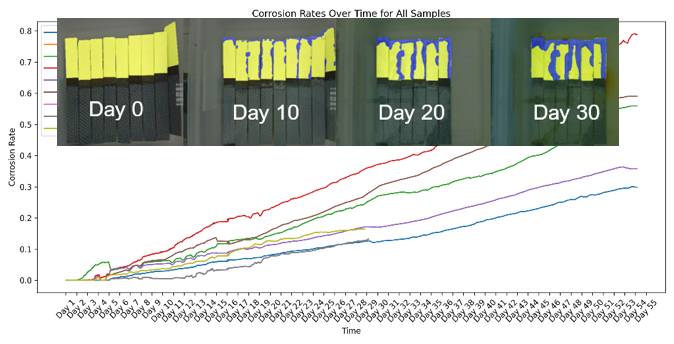
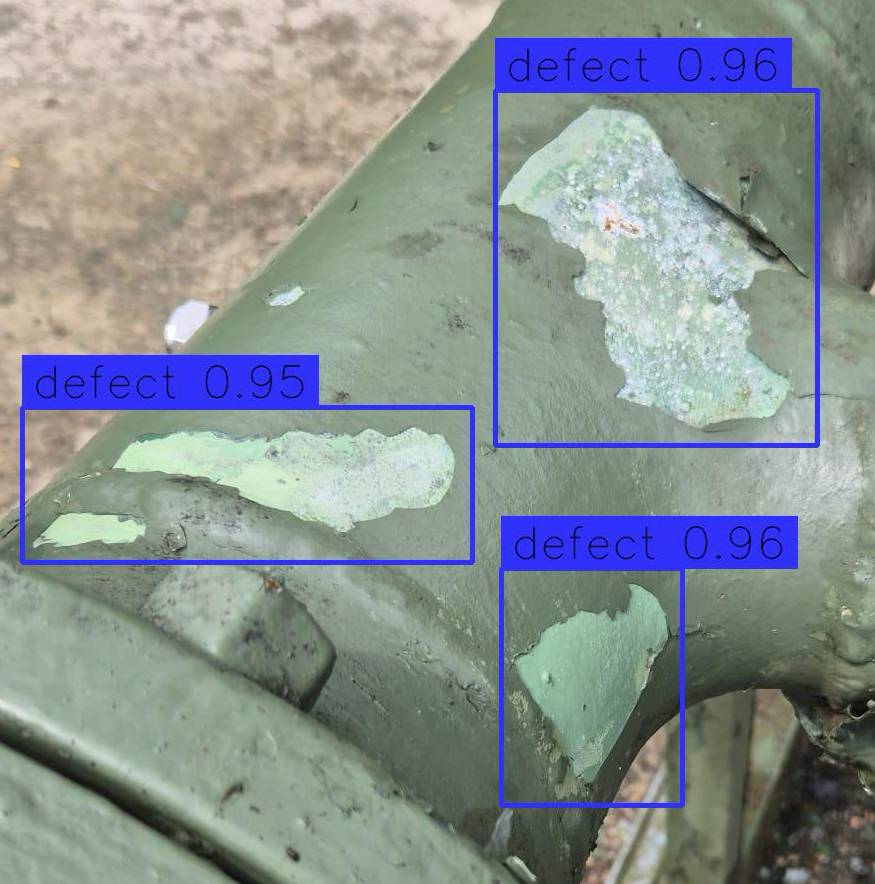
This webinar explores how modern computer vision techniques can be applied to industrial corrosion monitoring and defect detection. Different AI approaches are suited to different operational needs. For example, object detection models provide rapid identification of defects using bounding boxes and are well suited for large-scale inspection workflows, while segmentation models can precisely delineate defect boundaries for quantitative assessment of affected areas, albeit at a higher computational cost. The session will discuss the strengths and limitations of these approaches, practical considerations for model deployment, and how AI can be integrated to support safer asset integrity management.
Key Takeaways:
- Overview of AI and computer vision for corrosion detection
- Comparison of object detection and segmentation frameworks
- Data and annotation requirements for industrial AI applications
- Deployment considerations for edge devices
- Real-world examples of AI-enabled corrosion inspection workflows