
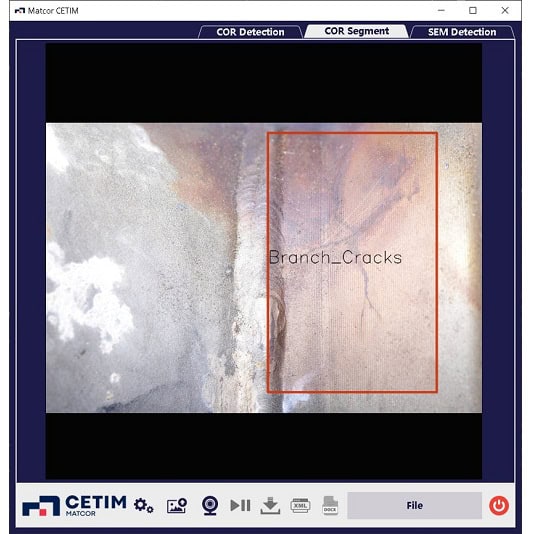
In the energy, oil and gas, and industrial infrastructure sectors, corrosion remains one of the most significant challenges affecting operational safety, equipment reliability, and maintenance costs. Pipelines, process equipment, steel structures, protective coatings, and other assets exposed to harsh environments require regular inspection to identify degradation early, prioritize maintenance activities, and maximize service life.
To address these challenges, Cetim and its subsidiary Cetim-Matcor have been advancing the application of artificial intelligence (AI) and computer vision technologies for corrosion inspection and asset integrity management. Their work focuses on leveraging AI to analyze images captured during field inspections and laboratory assessments, supporting experts in detecting, characterizing, and monitoring corrosion damage and coating degradation.
Transforming Inspection Data into Actionable Insights
Recent developments in AI-powered image classification, object detection, and image segmentation have created new opportunities for processing large volumes of visual inspection data. These technologies can assist maintenance and integrity teams by:
- Improving the detection of corrosion and surface defects
- Identifying and quantifying degraded areas
- Characterizing corrosion mechanisms and damage progression
- Monitoring asset condition over time
- Enhancing consistency across inspections
- Supporting data-driven maintenance and repair decisions
By converting inspection imagery into structured and actionable information, AI can help organizations improve asset reliability, optimize maintenance strategies, and reduce operational risks.
Adapting AI to Industrial Environments
While AI offers significant benefits, successful implementation requires solutions tailored to the specific industrial context. Performance depends on several factors, including asset type, inspection conditions, data quality, operating environment, and business objectives.
As a result, dedicated model development, training, and validation remain essential before AI systems can be deployed effectively in operational environments. This ensures that the technology delivers reliable and meaningful results that complement engineering expertise rather than replace it.
From Research to Real-World Applications
Cetim’s research and development activities span a broad range of corrosion and integrity management challenges, including:
- Surface corrosion assessment
- Corrosion coupon monitoring
- Inspection of steel structures
- Defect characterization and classification
- Protective coating degradation analysis
- Fracture surface evaluation and failure investigations
One example of these initiatives includes a project focused on evaluating paint coating degradation. Protective coatings serve as the first line of defense against environmental exposure and corrosion. By applying AI-driven image analysis, engineers can improve the assessment of coating condition, identify areas requiring intervention, and support more effective asset protection strategies.
The Future of AI in Asset Integrity
As inspection technologies continue to evolve, AI is becoming an increasingly valuable tool for supporting corrosion management and asset integrity programs. When combined with engineering expertise and robust inspection practices, AI can enhance the speed, accuracy, and consistency of condition assessments, enabling organizations to make more informed maintenance decisions and extend the lifespan of critical infrastructure.
This ongoing development demonstrates how AI can move beyond theoretical applications and deliver practical value in industrial inspection, helping companies improve safety, reliability, and long-term asset performance.