
- HOME /
- SUCCESS STORIES /
- Acoustic Emission Testing (AET) on atmospheric storage tanks
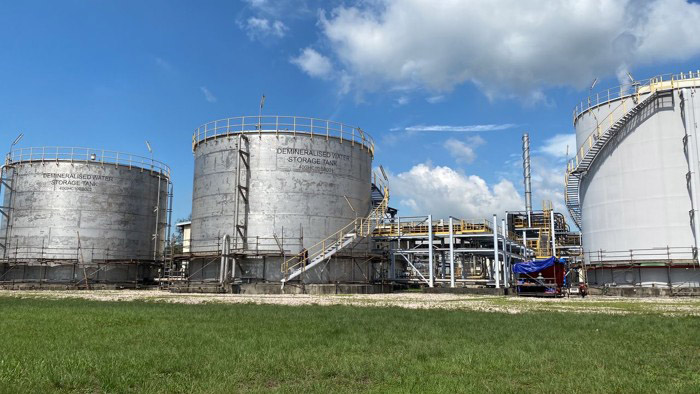
The Case
Acoustic emission testing was conducted to detect and monitor the degradation of tank bottom plates, providing operators with confidence to justify continued operation without intrusive inspection. The monitoring results were analysed and classified in terms of active corrosion and probability of leak. Subsequently, the next monitoring interval was recommended based on API 581 Risk-Based Inspection guidelines.
At a glance...
Cetim’s Requirement
Five atmospheric storage tanks have been operating for the past ten years without intrusive inspection to assess the condition of the tank bottom plates. The operator intended to implement an inspection technique that can accurately evaluate the condition of the tank bottom without requiring tank shutdown, thereby avoiding impacts on plant operation and production. Acoustic emission testing was identified as the inspection technique to meet the operator’s objective.
Cetim’s Solution
Acoustic emission testing (AET) is a global non-destructive testing (NDT) technique that detects and monitors the release of ultrasonic stress waves from localized sources when the asset is under stress. AET is capable of:
- Early detection of critical flaws to prevent premature deterioration
- Identification of emission source locations
- Assessment of asset condition and support for follow-up inspection and repair activities
- Monitoring equipment behaviour during pressure testing
In this case, CETIM and MATCOR, together with our Malaysian partner CEKAP, completed the acoustic emission monitoring of the five tanks for the operator. The monitoring results were analysed and classified in terms of active corrosion and probability of leak.
Customer Benefits
The final classification rating for each tank was derived based on data and experience from multiple years of acoustic emission monitoring by CETIM. Based on this classification, the next monitoring interval was recommended, and follow-up actions were proposed where necessary. This monitoring provided the operator with assurance regarding the condition of the bottom plates without requiring intrusive inspection.